From the works of Michael Wesch of Kansas University
A Vision of students today -
http://www.youtube.com/watch?v=dGCJ46vyR9o
The Class parody of the office -
http://mediatedcultures.net/ksudigg/?p=254
An anthropological introduction to Youtube by Michael Wesch -
http://mediatedcultures.net/ksudigg/?p=179
Tuesday, August 24, 2010

Monday, August 23, 2010
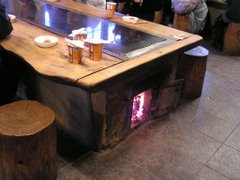
The Proposed 21st Pinoy Classroom: no more armchairs
With new administration, new secretary for the department of education, new budget for classrooms, these are all opportunities for positive change. Change can move in different facets, including a paradigm shift of what we have been accustomed as a local classroom.


Sources: http://newshopper.sulekha.com ; http://article.wn.com
Our old classrooms have a fixed blackboard, one or two doors, with the small rough, wooden armchairs. In some schools, there's the desk for two (often three) students.
Here's my idea of the primary and elementary classrooms in the public school. This time, let there be NO armchairs!

The Pinoy 21st classroom will have NO armchairs. The classroom do have rubber mats. It has oval low tables that can accommodate 8-10 students. The students, young boys and girls, sit on the floor with rubber mats. There are rolling blackboards and book shelves on the side. And of course, there is a small teacher's nook.
Outside the classroom, along the hallways, there will be open shelves for the shoes and slippers of the students. Removal of the slippers and shoes are a must before entering the classroom. This is the traditional concept of the Filipino homes. We respect our homes and keep them clean. So we also keep our classrooms clean.
Why not have armchairs or chairs for this matter? First, not having chairs or armchairs create a new, fresh mindset of our students (and even our leaders). So much learning can take place even in the absence of armchairs. This also allows more mobility and interaction among the students. They are not restricted with the convention of alphabetically arranged seats. Students who are bored can just drop on the floor to stretch or to sleep.
Having oval tables allow them too, to see the faces of their other classmates. This enhances transparency that make them aware of their classmates reactions and opinions. On the other hand, the setup also encourages high degree of peer learning and camaraderie.
There will be no concept of front and back, just sides. The teacher can use the two opposite rolling blackboards or even move them on the corners for a change of view. The blackboards can also serve as flipboards (or to hold the classic Manila paper). The clustered setup also allows the teacher to move around even with big classes. Modestly the setup can hold 48 to 60 students.
This is going to be fun! If the DepEd secretary will adopt this as an experimental setup, I am already volunteering to be the teacher to test it!


Sources: http://newshopper.sulekha.com ; http://article.wn.com
Our old classrooms have a fixed blackboard, one or two doors, with the small rough, wooden armchairs. In some schools, there's the desk for two (often three) students.
Here's my idea of the primary and elementary classrooms in the public school. This time, let there be NO armchairs!

The Pinoy 21st classroom will have NO armchairs. The classroom do have rubber mats. It has oval low tables that can accommodate 8-10 students. The students, young boys and girls, sit on the floor with rubber mats. There are rolling blackboards and book shelves on the side. And of course, there is a small teacher's nook.
Outside the classroom, along the hallways, there will be open shelves for the shoes and slippers of the students. Removal of the slippers and shoes are a must before entering the classroom. This is the traditional concept of the Filipino homes. We respect our homes and keep them clean. So we also keep our classrooms clean.
Why not have armchairs or chairs for this matter? First, not having chairs or armchairs create a new, fresh mindset of our students (and even our leaders). So much learning can take place even in the absence of armchairs. This also allows more mobility and interaction among the students. They are not restricted with the convention of alphabetically arranged seats. Students who are bored can just drop on the floor to stretch or to sleep.
Having oval tables allow them too, to see the faces of their other classmates. This enhances transparency that make them aware of their classmates reactions and opinions. On the other hand, the setup also encourages high degree of peer learning and camaraderie.
There will be no concept of front and back, just sides. The teacher can use the two opposite rolling blackboards or even move them on the corners for a change of view. The blackboards can also serve as flipboards (or to hold the classic Manila paper). The clustered setup also allows the teacher to move around even with big classes. Modestly the setup can hold 48 to 60 students.
This is going to be fun! If the DepEd secretary will adopt this as an experimental setup, I am already volunteering to be the teacher to test it!
The Role of the Classroom
When the new secretary of the Department of Education sat on his position, Sec. Armin Luistro received the first assignment from the new president of the country, Pres. Noynoy Aquino, and that is, to increase the number of classrooms in the country for the next two years (http://www.malaya.com.ph/07122010/metro5.html ). Increasing the number of classrooms did not sound to be a direct education problem. It is more of infrastructure issue. But classrooms seem to be a glaring issue for a poverty-stricken country giving high premium to education. What is the role of the classroom (aside from the fact it serves as an evacuation center when there is a calamity or disaster).
While I follow some academics in their cry for stronger and empowered social learning and with our college dean emphasizing the need "to develop a culture of innovation in the College in relation to these new tools (Teaching 2.0)", a huge portion of the archipelago and the leaders of the country lobby for better classrooms. Do we really need a classroom? What for? And would classroom really provide conducive environment for learning to take place? Will the desire to learn remain unaffected even if our Filipino students do not have complete books, some do not have shoes to wear, some do not have food to keep their attention? These are fundamental realities our local situation has to deal with.
The classroom in my opinion, has still the primary role of being a second home. This is the second home of the primary students. This is the second home of the high school students. The classroom is the second home where young minds get their inspiration and drive to learn, striving to study even with absence of the mind-nurturing supplements. The classroom is where the young students find their identities, where they start to discover who they are or what they want to become.
But how will these things happen? This is where the big role of the Filipino teacher comes in. The Pinoy teacher gives hope and motivation on how learning will help our lives. The Pinoy teacher strikes the balance of family and friends, the hard and soft skills to equip the students in their quest for knowledge. The Pinoy teacher is also strong on correcting misbehaviors with the hope she is molding good citizens of the country. She is making the classroom a true second home for the young minds. And because of this, we need inspirational, high-moral teachers as much as we need classrooms.
While I follow some academics in their cry for stronger and empowered social learning and with our college dean emphasizing the need "to develop a culture of innovation in the College in relation to these new tools (Teaching 2.0)", a huge portion of the archipelago and the leaders of the country lobby for better classrooms. Do we really need a classroom? What for? And would classroom really provide conducive environment for learning to take place? Will the desire to learn remain unaffected even if our Filipino students do not have complete books, some do not have shoes to wear, some do not have food to keep their attention? These are fundamental realities our local situation has to deal with.
The classroom in my opinion, has still the primary role of being a second home. This is the second home of the primary students. This is the second home of the high school students. The classroom is the second home where young minds get their inspiration and drive to learn, striving to study even with absence of the mind-nurturing supplements. The classroom is where the young students find their identities, where they start to discover who they are or what they want to become.
But how will these things happen? This is where the big role of the Filipino teacher comes in. The Pinoy teacher gives hope and motivation on how learning will help our lives. The Pinoy teacher strikes the balance of family and friends, the hard and soft skills to equip the students in their quest for knowledge. The Pinoy teacher is also strong on correcting misbehaviors with the hope she is molding good citizens of the country. She is making the classroom a true second home for the young minds. And because of this, we need inspirational, high-moral teachers as much as we need classrooms.
Saturday, August 14, 2010
Practicing ICT among Filipino Teachers
To teach a subject matter is one thing. To use ICT to enhance teaching of a subject matter is another thing. To use ICT to allow enjoyable, authentic and empowered learning would be another challenging thing for our Filipino teachers.
So it is fundamental that a Filipino teacher to use ICT in teaching and for learning to take place requires her to practice ICT. Practice means regular use of ICT. This means she should take time from her busy schedule to-- read and respond to her e-mails everyday; use the computer (maybe the school computer or her netbook computer) in making her lessons and grades, read relevant news sites and blogs related to her subject area everyday. For a Filipino teacher to be able to apply ICT effectively requires deliberate practice. Here's a very good example of deliberate practice, how Benjamin Franklin developed his writing skills -- http://www.anecdote.com.au/archives/2010/08/benjamin-frankl.html .
What happens after practice? The teacher becomes comfortable on the use of the technology-- the computer, the internet, the e-mail, maybe even some games, thesaurus or translation program. But it does not end here. Comfort and confidence she has gained would allow her now to incorporate various ICT tools in teaching and learning. And with the resilient character of technology, experimentation on how technology will deliver better teaching and encourage progressive learning can be done by the teacher.
So practice, constant use, experimentation and whole lot of exposure to various technologies will make our Filipino teacher a confident ICT practitioner.
So it is fundamental that a Filipino teacher to use ICT in teaching and for learning to take place requires her to practice ICT. Practice means regular use of ICT. This means she should take time from her busy schedule to-- read and respond to her e-mails everyday; use the computer (maybe the school computer or her netbook computer) in making her lessons and grades, read relevant news sites and blogs related to her subject area everyday. For a Filipino teacher to be able to apply ICT effectively requires deliberate practice. Here's a very good example of deliberate practice, how Benjamin Franklin developed his writing skills -- http://www.anecdote.com.au/archives/2010/08/benjamin-frankl.html .
What happens after practice? The teacher becomes comfortable on the use of the technology-- the computer, the internet, the e-mail, maybe even some games, thesaurus or translation program. But it does not end here. Comfort and confidence she has gained would allow her now to incorporate various ICT tools in teaching and learning. And with the resilient character of technology, experimentation on how technology will deliver better teaching and encourage progressive learning can be done by the teacher.
So practice, constant use, experimentation and whole lot of exposure to various technologies will make our Filipino teacher a confident ICT practitioner.
Friday, August 13, 2010
BASIC ICT TOOLS FOR THE FILIPINO TEACHER
As I promised, I will spend some time each week to write something about how ICT can help teaching and learning in our country.
I have been into the use of ICT teaching for over seventeen years now. I have always tried my best to be kept abreast of what’s happening in the IT and computing field and to use this knowledge to complement my teaching. Even with the advent of student or learner-centric approach to education, in the Philippines, in my opinion, before you achieve this, change will have to take place first among our beloved teachers.
For today I would like to start with what fundamental ICT tools a Filipino teacher would need. When we say Filipino teacher, she or he may be teaching in the primary school, elementary or high school or even tertiary school with no particular subject matter in mind. Here are my recommendations:
1. a netbook laptop. A netbook laptop is a tool that will allow her to do fundamental teaching work using technology. It will allow her to do her grades, make her lessons, and do online communication.
Why a netbook? A netbook is a standard 10” laptop with USB ports, audio ports, a built-in webcamera, a hard drive, it is lightweight, and has a battery life of 6-10hours. A Pinoy teacher usually has exam papers or book references in her bag. These are teaching materials she can’t just leave most of the time. So a lightweight netbook will provide more mobility for the teacher to do her work—in the campus, at home or in the park. (It is recommended to have two netbook adaptors, one to be used at home & another one in school).
2. a broadband connection. A Globe or Smart broadband connection is recommended. Together with mobility, the broadband connection allows cheaper internet access than going to the internet café.
I personally bring mine in my bag together with my compact powder. I don’t need to spend time finding a free slow wifi connection just to do my connectivity requirements. There are available software too that can make the broadband connection become telco agnostic. Just keep at least 3 extra sim card for connectivity use.
3. a Gmail or Yahoo e-mail account. A free email account that can be accessed anywhere 24/7 is very essential. Both Gmail and Yahoo allows a good size of working storage and a number of file attachments usually restricted in school or college servers. This allows her to communicate with other teachers, students, parents and even friends.
Constant use of email breaks the mindset barrier of hierarchy of communication. What do I mean with this? A Pinoy teacher does not have to make an appointment with her principal to discuss a class or student concern or to channel her concern first to the subject coordinator before elevating it to the principal. The beauty of the email allows the teacher to talk directly to the principal.
And promptness in communication too, can make a difference most of time especially for matters that require decision or resolution to problems.
4. a spreadsheet program. A spreadsheet program will permit her to make a transparent, referred computation of grades. A spreadsheet program also allows easy management of grades.
5. a word editor program. A word editor program allows her to make her lessons, notes, exams (in different versions) and even her personal essays like this one.
These are the basic tools needed. And our Pinoy teacher is headed to becoming a very good ICT teaching practitioner. Have a great week!
I have been into the use of ICT teaching for over seventeen years now. I have always tried my best to be kept abreast of what’s happening in the IT and computing field and to use this knowledge to complement my teaching. Even with the advent of student or learner-centric approach to education, in the Philippines, in my opinion, before you achieve this, change will have to take place first among our beloved teachers.
For today I would like to start with what fundamental ICT tools a Filipino teacher would need. When we say Filipino teacher, she or he may be teaching in the primary school, elementary or high school or even tertiary school with no particular subject matter in mind. Here are my recommendations:
1. a netbook laptop. A netbook laptop is a tool that will allow her to do fundamental teaching work using technology. It will allow her to do her grades, make her lessons, and do online communication.
Why a netbook? A netbook is a standard 10” laptop with USB ports, audio ports, a built-in webcamera, a hard drive, it is lightweight, and has a battery life of 6-10hours. A Pinoy teacher usually has exam papers or book references in her bag. These are teaching materials she can’t just leave most of the time. So a lightweight netbook will provide more mobility for the teacher to do her work—in the campus, at home or in the park. (It is recommended to have two netbook adaptors, one to be used at home & another one in school).
2. a broadband connection. A Globe or Smart broadband connection is recommended. Together with mobility, the broadband connection allows cheaper internet access than going to the internet café.
I personally bring mine in my bag together with my compact powder. I don’t need to spend time finding a free slow wifi connection just to do my connectivity requirements. There are available software too that can make the broadband connection become telco agnostic. Just keep at least 3 extra sim card for connectivity use.
3. a Gmail or Yahoo e-mail account. A free email account that can be accessed anywhere 24/7 is very essential. Both Gmail and Yahoo allows a good size of working storage and a number of file attachments usually restricted in school or college servers. This allows her to communicate with other teachers, students, parents and even friends.
Constant use of email breaks the mindset barrier of hierarchy of communication. What do I mean with this? A Pinoy teacher does not have to make an appointment with her principal to discuss a class or student concern or to channel her concern first to the subject coordinator before elevating it to the principal. The beauty of the email allows the teacher to talk directly to the principal.
And promptness in communication too, can make a difference most of time especially for matters that require decision or resolution to problems.
4. a spreadsheet program. A spreadsheet program will permit her to make a transparent, referred computation of grades. A spreadsheet program also allows easy management of grades.
5. a word editor program. A word editor program allows her to make her lessons, notes, exams (in different versions) and even her personal essays like this one.
These are the basic tools needed. And our Pinoy teacher is headed to becoming a very good ICT teaching practitioner. Have a great week!
Saturday, July 31, 2010
1st in Teaching Evaluation SY 2009-2010-Grand Slam and the 2010 Metrobank Outstanding Teacher Awards
For the 3rd consecutive school year, the Information Technology Department placed 1st among the departments of De La Salle University in Manila in terms of ITEO teaching evaluation.
Congratulations to the IT Department to this Grand Slam!!! Congratulations too, to Mr. Oliver Malabanan, department head.
I think our chairperson, Mr. Oliver Malabanan, should call for a big celebration! Imagine we defeated the different departments in the College of Education. It's not a contest I know. But it just shows that we have effective teaching strategies!
I'm proud to be part of this department! Cheers!!! :-)
___________________________
I would also want to congratulate a very respectable and very dedicated professor and university fellow in our college, Dr. Raymund Sison, likewise a National Scientist, as a recipient of the prestigious Metrobank Foundation Outstanding Teacher Award this 2010. I salute you Dr. Sison! Cheers!!! :-)
Congratulations to the IT Department to this Grand Slam!!! Congratulations too, to Mr. Oliver Malabanan, department head.
I think our chairperson, Mr. Oliver Malabanan, should call for a big celebration! Imagine we defeated the different departments in the College of Education. It's not a contest I know. But it just shows that we have effective teaching strategies!
I'm proud to be part of this department! Cheers!!! :-)
___________________________
I would also want to congratulate a very respectable and very dedicated professor and university fellow in our college, Dr. Raymund Sison, likewise a National Scientist, as a recipient of the prestigious Metrobank Foundation Outstanding Teacher Award this 2010. I salute you Dr. Sison! Cheers!!! :-)
For the Filipino Teacher
I spent a brief time in Camelot Hotel yesterday afternoon in Quezon City giving a lecture on Communities of Practice (COPs). I was moved by the simplicity of the delegates and the warm hospitality of the professors from the Polytechnic University of the Philippines. And one of the questions thrown to me really struck me (not exactly to this statement but to this effect)-- Given my exposure on various uses of technology in education, what is the topmost problem we have locally and how can this be addressed?
And so I answered that I still consider economic problem as the primary issue. It was concurred by Dr. Lorenzo of PUP. But I guess economic issue should not hurdle us from building a COP for that matter. I also would like to dedicate extra time starting this week to post something to support the idea of ICT use in teaching--for my dedicated teaching colleagues in the country.
I will share different creative ways of using ICT in teaching as I have done them.
And so I answered that I still consider economic problem as the primary issue. It was concurred by Dr. Lorenzo of PUP. But I guess economic issue should not hurdle us from building a COP for that matter. I also would like to dedicate extra time starting this week to post something to support the idea of ICT use in teaching--for my dedicated teaching colleagues in the country.
I will share different creative ways of using ICT in teaching as I have done them.
The 3rd Annual Conference The Philippine Association for Business Educators, (PAFBE) Inc
My supervisor was one of the speakers in the 3rd Annual Conference The Philippine Association for Business Educators, (PAFBE) Inc held last July 30 and 31. Unfortunately, he had a sudden important engagement and I agreed to pitch for him. Dr. Lorenzo of PUP, the convenors, the officers, the teachers and delegates of PAFBE gave a warm response to my presentation.
Here are the excerpts of my presentation---
"Even with late notice, I tried my best to prepare something that you will bring home as part of a solution instead of posting many issues and concerns that may drag your weekend of pondering whether there is an answer to the never ending question of how do we implement technology.
For this afternoon, I am bringing to you a not very young idea. This is an idea typically used in business organizations in the light of sustaining the use and application of technology. And I will put this in the context of education. The title of my presentation is Creating Communities of Practice (COPs) through Practical ICT and Web 2.0."
"Context is putting and using technology on the right perspective of the subject matter. And the knowledge and skills of the business educators or even the teachers will be very important in this situation. Context is not using technology as suggested in the software tutorial. Context is making the students realize to use or apply the right technology as prescribed by the situation, the problem to be solved or the project to be done. And this is one of the creative challenges among teachers".
I hope I was able to inspire them of the idea of Communities of Practice. I have shared with them the concept, the characteristics as posted by Etienne Wenger, the proponent of the COP and I gave my own examples situating it to the local setting. I also hope that introducing Web 2.0 gave informative insights of various alternatives on how to use them in teaching. Some of these are--
Web 2.0 Teaching & Learning Tools
These are some of the common examples. There are still many tools and solutions.
Youtube – to showcase student experiences; to reuse good howto videos
An anthropological introduction to Youtube by Michael Wesch -- http://www.grokdotcom.com/2008/08/04/1462/
An ethical behavior and social responsibility video by Louie Sioco, James Sy & Johann Go http://www.youtube.com/watch?v=-EJW89mUagA
Blogs – to extend class discussions; to extend student interactions
http://whymanagetech.blogspot.com/2007/05/notes-on-external-business-environment.html
Forums, e-groups & social network sites – to post announcements; to share files; & to encourage healthy dialogues and responsible online behavior among students
Google maps – to visually enhance geography concepts
Online News – to know what is happening in the world
Wikis – to encourage collaborative writing and research
Photos – to encourage artistic expression and develop digital art skills
http://mobilemartha.multiply.com/photos/album/12/EM-TECH_Technology_Exhibit
Skype & yahoo messenger – to facilitate online discussions
Second life – to enhance remote role-playing activities
I also mentioned to them that mobile phones and music players are useful ICT tools--
o To capture proof of data gathering (e.g. interview)
o To capture procedures of the experiments
o To capture board notes
o To listen about the lessons or to produce outputs through podcasts
Podcasts are audio files in MP3 format that is used to hold various content like discussions, interviews, opinions or meetings.
Of course, PRACTICE makes PERFECT or EFFECTIVE OUTCOMES.
Very important hindsights to bring home---
1. Don’t get immersed in the technology, context is more important!
2. Make it a rule of thumb to apply your teaching techniques and styles.
3. Discuss your methods openly to your colleagues. It encourages “shared practice”.
4. Encourage student participation and collaboration.
5. Institutionalize “best practices” and build a “Community of Practice”!
Here are the excerpts of my presentation---
"Even with late notice, I tried my best to prepare something that you will bring home as part of a solution instead of posting many issues and concerns that may drag your weekend of pondering whether there is an answer to the never ending question of how do we implement technology.
For this afternoon, I am bringing to you a not very young idea. This is an idea typically used in business organizations in the light of sustaining the use and application of technology. And I will put this in the context of education. The title of my presentation is Creating Communities of Practice (COPs) through Practical ICT and Web 2.0."
"Context is putting and using technology on the right perspective of the subject matter. And the knowledge and skills of the business educators or even the teachers will be very important in this situation. Context is not using technology as suggested in the software tutorial. Context is making the students realize to use or apply the right technology as prescribed by the situation, the problem to be solved or the project to be done. And this is one of the creative challenges among teachers".
I hope I was able to inspire them of the idea of Communities of Practice. I have shared with them the concept, the characteristics as posted by Etienne Wenger, the proponent of the COP and I gave my own examples situating it to the local setting. I also hope that introducing Web 2.0 gave informative insights of various alternatives on how to use them in teaching. Some of these are--
Web 2.0 Teaching & Learning Tools
These are some of the common examples. There are still many tools and solutions.
Youtube – to showcase student experiences; to reuse good howto videos
An anthropological introduction to Youtube by Michael Wesch -- http://www.grokdotcom.com/2008/08/04/1462/
An ethical behavior and social responsibility video by Louie Sioco, James Sy & Johann Go http://www.youtube.com/watch?v=-EJW89mUagA
Blogs – to extend class discussions; to extend student interactions
http://whymanagetech.blogspot.com/2007/05/notes-on-external-business-environment.html
Forums, e-groups & social network sites – to post announcements; to share files; & to encourage healthy dialogues and responsible online behavior among students
Google maps – to visually enhance geography concepts
Online News – to know what is happening in the world
Wikis – to encourage collaborative writing and research
Photos – to encourage artistic expression and develop digital art skills
http://mobilemartha.multiply.com/photos/album/12/EM-TECH_Technology_Exhibit
Skype & yahoo messenger – to facilitate online discussions
Second life – to enhance remote role-playing activities
I also mentioned to them that mobile phones and music players are useful ICT tools--
o To capture proof of data gathering (e.g. interview)
o To capture procedures of the experiments
o To capture board notes
o To listen about the lessons or to produce outputs through podcasts
Podcasts are audio files in MP3 format that is used to hold various content like discussions, interviews, opinions or meetings.
Of course, PRACTICE makes PERFECT or EFFECTIVE OUTCOMES.
Very important hindsights to bring home---
1. Don’t get immersed in the technology, context is more important!
2. Make it a rule of thumb to apply your teaching techniques and styles.
3. Discuss your methods openly to your colleagues. It encourages “shared practice”.
4. Encourage student participation and collaboration.
5. Institutionalize “best practices” and build a “Community of Practice”!
Wednesday, July 28, 2010
To confer or not to confer in a conference


There are many reasons why an academic would want to participate in a conference. It could be to be able to validate her ideas and get insights on others' perception. It is also a way for her to become abreast of the new developments in her field, realize her ideas may not be new but still useful. It is also possible to realize that things that motivate her to do research may be the same motivations other academics have.
In a conference, it is either she will engage in a constructive dialogue or not. It is also possible that she will just be on that stage of just receiving, filtering and processing all the new things she is hearing and learning.
It is also a way to see the world, travel and learn about other cultures and try out new dishes. This is one of the attractive side of participating in a conference. She gets to be out of the classroom, on an official capacity, move in autonomy, manage schedules and accommodations, learn phrases of another language and interact with coercive taxi drivers.
But the other important thing that some conference attendees tend to forget or overlook is the opportunity of meaningful connections, having new academic friends (maybe real friends in the long run) and a possibility of continuous exchange of new ideas and experiences. These meaningful connections are not completely addressed by online interactions or even listening to a video or podcast of a very good social anthropologist. Nothing can replace a beautiful encounter in a worthwhile conference or symposium.
And I am glad I took such bold step of engaging in meaningful connections. I have a few but very good academic friends. And we still keep in touch.
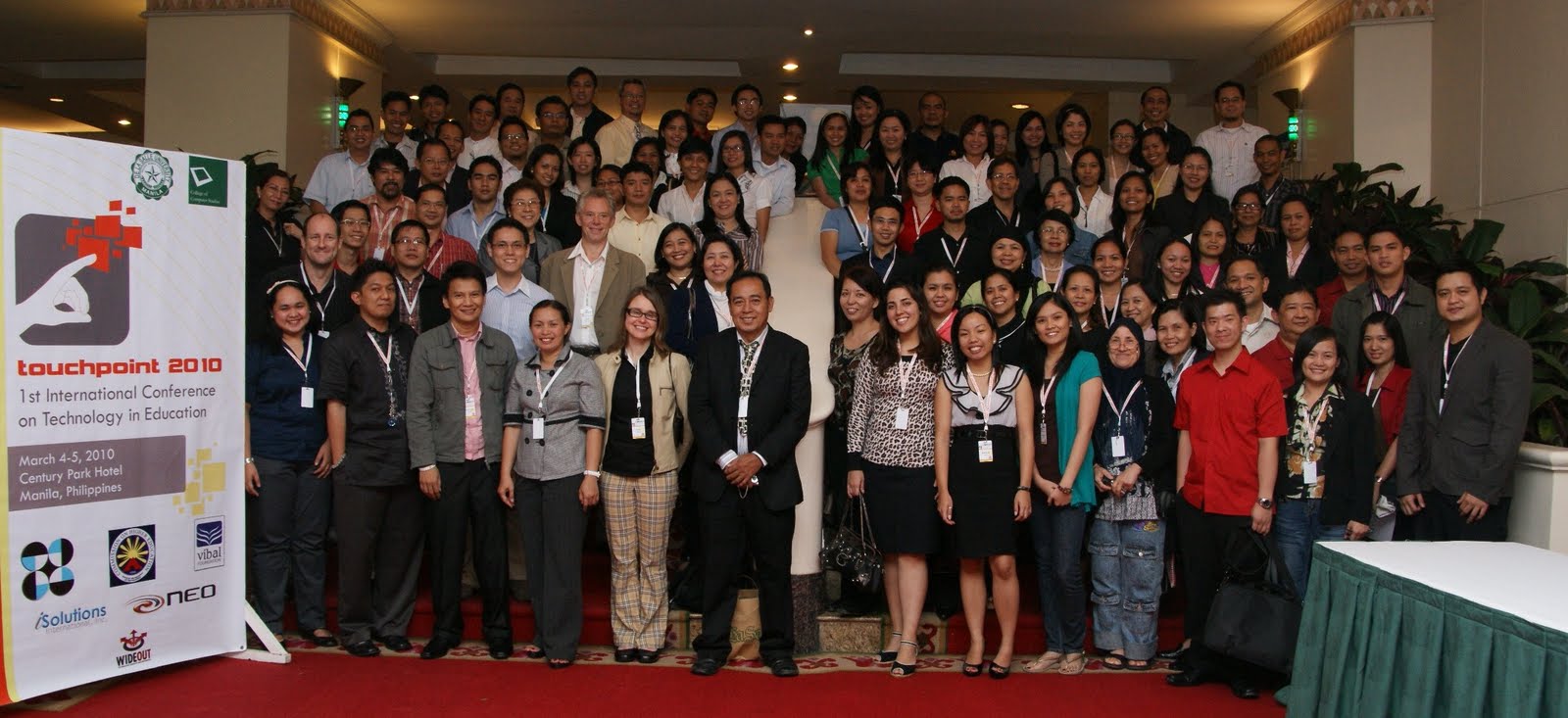
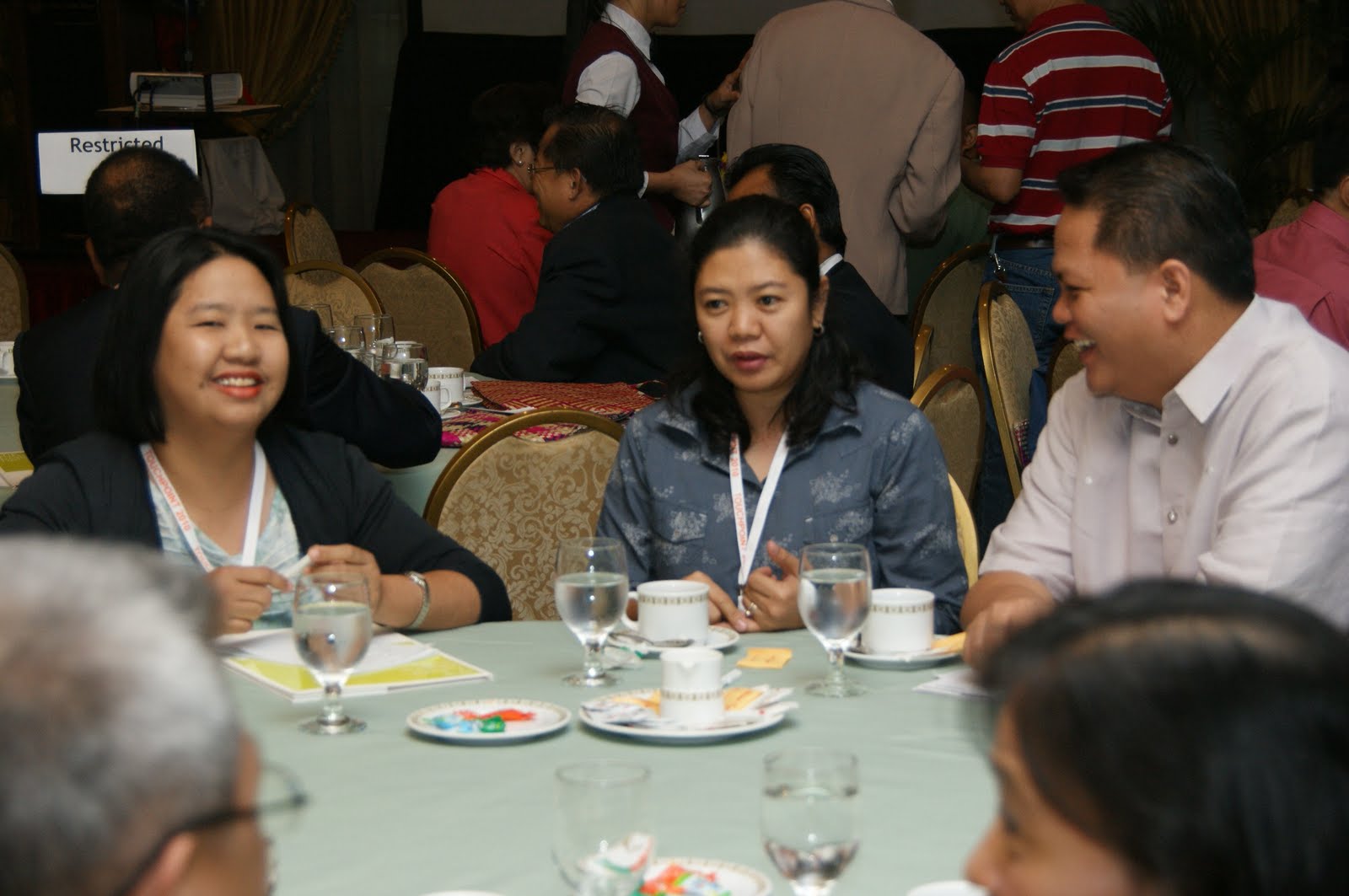
*The first four photos were taken during the ICICTE July 2009 Conference in Corfu, Greece. Some of the academic friends I met-- Maria Spante, Liming Zhang, Karen Baskett (not in the photo), Uthman Alturki, Hind Alfadda, Keith Kirkwood and Svetlana Osipova.
Maria Spante and Keith Kirkwood were both gracious to come to Manila last March 2010 to speak in our conference. (The last photo was taken on the first day of the Manila conference.)




TOUCHPOINT 2010 Invited Guests and Friends
Keynote Speaker:
Maria Spante, Ph.D.
Chalmers University of Technology
Department of Technology Management and Economics
MARIA SPANTE holds a PhD position at Chalmers University of Technology, Department of Technology Management and Economics, Division of Technology and Society. Dr. Spante is a prolific researcher. Her current research expertise focuses on social interaction in technical systems, technical systems and human relations, and learning and interactive media.
Plenary Speakers:
Emmanuel Lallana, Phd.
Chief Executive
ideacorp
EMMANUEL LALLANA is the Chief Executive of ideacorp, an independent, non-profit organization focused on the use (ICT) in governance and education, in business and the economy and in the transforming society. Currently, Dr. Lallana is the project leader of Pan Asia Network on Democratic eGovernance (PANeGOV), a nine-country research initiative on the use of ICT in good governance and citizen empowerment in Asia.
Keith Kirkwood
School of Learning Support
Victoria University, Melbourne, Australia
KEITH KIRKWOOD is a Lecturer in the School of Learning Support at Victoria University in Melbourne, Australia, where he is managing the design and development of the SNAP Platform, and has helped articulate the School’s Students Supporting Students Learning strategy. He is working towards the integration of learning and information skills in the development of a holistic and integrated participatory learning platform.

Maria Spante, Ph.D.
Chalmers University of Technology
Department of Technology Management and Economics
MARIA SPANTE holds a PhD position at Chalmers University of Technology, Department of Technology Management and Economics, Division of Technology and Society. Dr. Spante is a prolific researcher. Her current research expertise focuses on social interaction in technical systems, technical systems and human relations, and learning and interactive media.
Plenary Speakers:
Emmanuel Lallana, Phd.
Chief Executive
ideacorp
EMMANUEL LALLANA is the Chief Executive of ideacorp, an independent, non-profit organization focused on the use (ICT) in governance and education, in business and the economy and in the transforming society. Currently, Dr. Lallana is the project leader of Pan Asia Network on Democratic eGovernance (PANeGOV), a nine-country research initiative on the use of ICT in good governance and citizen empowerment in Asia.
Keith Kirkwood
School of Learning Support
Victoria University, Melbourne, Australia
KEITH KIRKWOOD is a Lecturer in the School of Learning Support at Victoria University in Melbourne, Australia, where he is managing the design and development of the SNAP Platform, and has helped articulate the School’s Students Supporting Students Learning strategy. He is working towards the integration of learning and information skills in the development of a holistic and integrated participatory learning platform.

And there's Touchpoint 2010

These are my thoughts and words for Touchpoint 2010--
TOUCHPOINT is a new word and concept coined to denote an engaging interaction, a learning epiphany, a fresh connection. It can still be defined further. And as we realize the idea of Touchpoint, the more it becomes meaningful.
When Touchpoint 2010 International Conference was conceived, it has the following goals—to encourage intellectual engagement among Filipino academic peers, to open and create opportunities for linkages and connections, and to support local teachers and educators on their quest for better teaching and learning practices with the use of ICT. The presence and participation of foreign academic peers have enhanced the quality of didactic exchange in this historical event.
________________________________
Here's the conference programme.
Conference Programme
March 4, 2010
Thursday
7.30-8.30am Registration
8.30-8.40am National Anthem
Invocation by Prof. Estefanie Ulit
8.40-9.00am Welcome Remarks
Br. Armin A. Luistro FSC, President and Chancellor, De La Salle University
9.00-9.15am The Touchpoint 2010 Rationale
Prof. Oliver Malabanan, Touchpoint 2010 Program Chair
9.15-9.20am Introduction to First Plenary Speaker
Prof. Oliver Malabanan, Touchpoint 2010 Program Chair
9.15-10.00am First Plenary Talk and Keynote Speech
“Interactivity, Visualization and Learning: Challenges and Possibilities”
Dr. Maria Spante (Invited)
Chalmers University, Gothenburg, Sweden
10.00-10.20am Questions/Reactions to Plenary Talk
10.20-10.40am Coffee Break
10.40-10.50am Introduction to Second Plenary Speaker
Prof. Sherwin Ona, CITe4D Chair, DLSU
10.50-11.25am Second Plenary Talk
Dr. Emmanuel Llana (Invited)
President, Idea Corp
11.25-11.40am Questions/Reactions to Plenary Talk
11.40-12.00nn Cultural Presentation by the La Salle Dance Company
12nn-1.00pm Lunch
1.00-1.10pm Introduction to the Third Plenary Speaker
Prof. Ma. Victoria Pineda, Touchpoint 2010 Vice Program Chair
1.10-1.50pm Third Plenary Talk
“Participating To Learn, Learning To Participate”
Prof. Keith Kirkwood (Invited)
Victoria University, Melbourne, Australia
1.50-2.10pm Questions/Reactions to Plenary Talk
2.10-2.30pm Coffee Break
2.30-5.00pm Parallel Sessions
March 5, 2010
Friday
9.00-9.10am Introduction to the Fourth Plenary Speaker
Dr. Zelinna Cynthia Pablo-dela Cruz
Information Technology Department, De La Salle University
9.10-9.45am Fourth Plenary Talk
Prof. Charibeth Cheng
Director, Advanced Research Institute for Computing, De La Salle University
9.45-10.00am Questions/Reactions to Plenary Talk
10.00-10.20am Coffee Break
10.30-12.00nn Parallel Sessions
12.00-1.00pm Lunch
1.00-4.30pm Parallel Sessions
4.00-4.30pm Coffee Break
4.30-4.40pm Introduction to the Fifth Plenary Speaker
Prof. Estefanie Ulit, De La Salle University
4.40-5.20pm Fifth Plenary Talk and Closing of the Conference
Dr. Jose Lloyd Espiritu, Touchpoint 2010 Editor
De La Salle University, Manila
5.20-5.30pm Questions/Reactions to Plenary Talk
6.30-7.00pm Pick-up time for the Social Dinner
7.00-8.30pm Social Dinner with all the Presenters & Guests
with Intermission of the DLSU Cultural Arts Office
Social Dinner is sponsored by iSolutions
Prof. Renato Jose Molano
Master of Ceremonies
Updates in 2010
It's been awhile since I updated these pages. September 2009-March 2010 were very busy months for me. First there was the devastating Typhoon Ondoy. It gave me the chance do urgent and dispersed volunteer work because the people, the families that need support were just too many.
Next, I was also part of the DLSU-CCS Technical Team that evaluated and monitored the Automated Election Systems in the Philippines; engaged in training roadshows, and served as one of the resource persons on the side of DLSU. This AES study was initiated by the Lasallian Justice and Peace Commission and by the College of Computer Studies of De La Salle University.
In parallel with the AES activities, I have been doing the preparations for the Touchpoint 2010 International Conference on Technology in Education as Conference Secretariat.
I am no superhero. But I guess the energy and the momentum keep me on my toes to just keep going. I am blessed to have very supportive supervisors like Mr. Oliver Malabanan, Mr. Sherwin Ona, Ms. Chari Cheng and Dr. Rachel Roxas. Along the way I was also blessed (again) with reliable support staff like Ms. Hazel Ventura and Mr. Roger Damo. And I had good working relationship with Mr. Rene Molano, Ms. Stef Ulit, Mr. Glenn Sipin, Ms. Christine Tavera and of course, Ms. Marivic Tangkeko as we accomplish our goals together.
And for school year 2010, several of my projects are focused on community-based disaster risk reduction.
Next, I was also part of the DLSU-CCS Technical Team that evaluated and monitored the Automated Election Systems in the Philippines; engaged in training roadshows, and served as one of the resource persons on the side of DLSU. This AES study was initiated by the Lasallian Justice and Peace Commission and by the College of Computer Studies of De La Salle University.
In parallel with the AES activities, I have been doing the preparations for the Touchpoint 2010 International Conference on Technology in Education as Conference Secretariat.
I am no superhero. But I guess the energy and the momentum keep me on my toes to just keep going. I am blessed to have very supportive supervisors like Mr. Oliver Malabanan, Mr. Sherwin Ona, Ms. Chari Cheng and Dr. Rachel Roxas. Along the way I was also blessed (again) with reliable support staff like Ms. Hazel Ventura and Mr. Roger Damo. And I had good working relationship with Mr. Rene Molano, Ms. Stef Ulit, Mr. Glenn Sipin, Ms. Christine Tavera and of course, Ms. Marivic Tangkeko as we accomplish our goals together.
And for school year 2010, several of my projects are focused on community-based disaster risk reduction.
Tuesday, March 24, 2009
I want to thank for~~


listening and learning from the bright and challenging ideas in the fora..
meeting the fine, intelligent, warm and cheerful Saudi ladies..
being able to see the very beautiful Riyadh..
experiencing the amazing and admirable Arab culture..
tasting some authentic Arabian food..
having the phone company of my brothers from Dubai and Qassim..
the nice Filipino "kabayans" whom I've talked to..
the generosity of the NCeL and the Min of Higher Educ..
Masha Allah, thank you for all the graces..
My Riyadh Trip
Mar. 2. I received an e-mail from the KSA conference organizers that they will be sponsoring my participation.
Mar. 4. I received the documents required in processing my Saudi visa.
Mar. 10. I got my Saudi visa.
Mar. 12. I was sick and had an upset stomach. But I was able to finish my KSA presentation of about 32 slides.
Mar. 13. It was late in the evening when I received my e-ticket.
Mar. 15, 12.15 mla time. I left Manila for a straight flight to Riyadh via Saudia airlines.
Mar. 15, 20.30 ksa time. I checked in at the Al Khozama Hotel.
Mar. 16. I had the chance to see the Al Faisalaiah Mall, spent an hour at the Al Faisaliah Tower to see the highly urbanized layout of Riyadh. In the afternoon, made a 500meters walk going to the Panda supermarket. The Olaya roads are wide, clean and the sidewalks are very spacious. I saw a good number of very nice chocolate stores.
That night, I slept early around 8.30pm and woke up at 12.30am ksa time, to study and prepare for my lecture.
Mar 17. I felt good that day. I went to the grandballroom of the Al Faisaliah for the conference and heard very excellent plenary lectures. I also met and talked to some lady professors from the KSU and KAU of Jeddah. The Saudi ladies I met were very kind, warm, cheerful. One invited me to Jeddah and another one invited me to Medina.
In the afternoon, I delivered my lecture at Hall 3. I was the third speaker. I was very happy to have received questions and compliments from other academic colleagues. Mashallah! :)
I finished all the sessions in the afternoon, got a Starbucks frappucino and head back to the hotel.
Mar. 18. After listening to another set of very fine speakers, I had a nice lunch. I decided to take a short walk and found Dr. Kim, my mentor from Korea and Mr. Lee, a good academic friend from Korea too, having lunch. I had the chance to talk to them.
In the afternoon, we had a tour at the National Museum, so far the biggest museum I have visited.
Mar. 19. We were brought to the dates store and the small market near another museum.
23.15 ksa time, i left for Manila.
Mar. 4. I received the documents required in processing my Saudi visa.
Mar. 10. I got my Saudi visa.
Mar. 12. I was sick and had an upset stomach. But I was able to finish my KSA presentation of about 32 slides.
Mar. 13. It was late in the evening when I received my e-ticket.
Mar. 15, 12.15 mla time. I left Manila for a straight flight to Riyadh via Saudia airlines.
Mar. 15, 20.30 ksa time. I checked in at the Al Khozama Hotel.
Mar. 16. I had the chance to see the Al Faisalaiah Mall, spent an hour at the Al Faisaliah Tower to see the highly urbanized layout of Riyadh. In the afternoon, made a 500meters walk going to the Panda supermarket. The Olaya roads are wide, clean and the sidewalks are very spacious. I saw a good number of very nice chocolate stores.
That night, I slept early around 8.30pm and woke up at 12.30am ksa time, to study and prepare for my lecture.
Mar 17. I felt good that day. I went to the grandballroom of the Al Faisaliah for the conference and heard very excellent plenary lectures. I also met and talked to some lady professors from the KSU and KAU of Jeddah. The Saudi ladies I met were very kind, warm, cheerful. One invited me to Jeddah and another one invited me to Medina.
In the afternoon, I delivered my lecture at Hall 3. I was the third speaker. I was very happy to have received questions and compliments from other academic colleagues. Mashallah! :)
I finished all the sessions in the afternoon, got a Starbucks frappucino and head back to the hotel.
Mar. 18. After listening to another set of very fine speakers, I had a nice lunch. I decided to take a short walk and found Dr. Kim, my mentor from Korea and Mr. Lee, a good academic friend from Korea too, having lunch. I had the chance to talk to them.
In the afternoon, we had a tour at the National Museum, so far the biggest museum I have visited.
Mar. 19. We were brought to the dates store and the small market near another museum.
23.15 ksa time, i left for Manila.

Wednesday, February 25, 2009
The Pains of Doing Research
Doing research is a vocation. Why? While she is teaching (maybe with a full workload), she wants to do research. After data gathering and analysis, she writes the paper. Then she has to polish the paper. Then she submits the paper for possible participation in a conference. After which, the paper will be subject to two or three reviews and/or revisions.
Then she has to find a financial support to be able to evangelize her ideas.
In my university, a faculty member can avail of research funding to the amount of Php15k (or USD300) + payment for the travel tax (Php1,620) and Phil airport terminal fee (Php750) and a a maximum of USD250 for conference registration. All of these if you want to participate and present a research paper in an international conference.
Based on experience, this is a very modest budget. It may allow her to join a conference within southeast Asia but she will have to be in a very tight budget.
Then she has to prepare her trip. She has to plan in advance, this means advance hotel and airlines booking to get affordable rates (if possible). She also has to check the location of the conference area so that the means of transport becomes accessible to her. She also has to plan what she's supposed to wear, not forget the calling cards, the camera (although most of the time nobody is available to take her picture during the conference)and maybe bring small, native souvenirs for new acquaintances. And of course, she has to prepare her presentation and anticipate possible questions that will be asked.
After the conference, she has to submit a report and a proof of her participation.
Hence I say research is a vocation. Not everyone in the university will be interested with what she's doing. For the others it is easier to avail of a package tour if you just want to visit a neighboring country, try new dishes and go shopping.
And what is ironic, international people are eager to hear her ideas while the people in her university could not care.
Then she has to find a financial support to be able to evangelize her ideas.
In my university, a faculty member can avail of research funding to the amount of Php15k (or USD300) + payment for the travel tax (Php1,620) and Phil airport terminal fee (Php750) and a a maximum of USD250 for conference registration. All of these if you want to participate and present a research paper in an international conference.
Based on experience, this is a very modest budget. It may allow her to join a conference within southeast Asia but she will have to be in a very tight budget.
Then she has to prepare her trip. She has to plan in advance, this means advance hotel and airlines booking to get affordable rates (if possible). She also has to check the location of the conference area so that the means of transport becomes accessible to her. She also has to plan what she's supposed to wear, not forget the calling cards, the camera (although most of the time nobody is available to take her picture during the conference)and maybe bring small, native souvenirs for new acquaintances. And of course, she has to prepare her presentation and anticipate possible questions that will be asked.
After the conference, she has to submit a report and a proof of her participation.
Hence I say research is a vocation. Not everyone in the university will be interested with what she's doing. For the others it is easier to avail of a package tour if you just want to visit a neighboring country, try new dishes and go shopping.
And what is ironic, international people are eager to hear her ideas while the people in her university could not care.
Tuesday, February 24, 2009
Resourcefulness and Resiliency
It took more than two months before I heard about the two abstracts I submitted in the first e-Learning conference of KSA. With God's help I was able to finish a 15-page paper about the e-Learning Best Practices of South Korea and Thailand. It took again another month to learn of the results. My paper was accepted. The paper after acceptance was submitted again to the conference' scientific jurisdiction, and finally after two weeks, my paper was approved for participation in the conference.
Still I couldn't be excited, I cannot find any financial support. I tried to be resourceful~~I am presently seeking the support of my supervisor, my college dean, our research director, my mentor in South Korea and even alliances from the Dept of Foreign Affairs. I am in search of countries or embassies who have extra funds and will be willing to support a zealous lecturer from Manila. Maybe I should also try to seek help from Thailand. The conference is 18 days away and I still don't have funding..
As my resourcefulness becomes futile, I have to become resilient to accept that the fruits of sacrifices will have different faces. I have to be resilient to continue writing and do research, not just for myself but for my teaching, my family, my university and my country. I have to be resilient to realize that there's a plan or a way to any endeavor. My timing right now is not just right..
Still I couldn't be excited, I cannot find any financial support. I tried to be resourceful~~I am presently seeking the support of my supervisor, my college dean, our research director, my mentor in South Korea and even alliances from the Dept of Foreign Affairs. I am in search of countries or embassies who have extra funds and will be willing to support a zealous lecturer from Manila. Maybe I should also try to seek help from Thailand. The conference is 18 days away and I still don't have funding..
As my resourcefulness becomes futile, I have to become resilient to accept that the fruits of sacrifices will have different faces. I have to be resilient to continue writing and do research, not just for myself but for my teaching, my family, my university and my country. I have to be resilient to realize that there's a plan or a way to any endeavor. My timing right now is not just right..
Tuesday, January 27, 2009
Upcoming Conferences that Preoccupies My Attention
ELI RIYADH 2009
First International Conference on e-Learning and Distance Learning
March 16-18-2009
Riyadh, KSA
Link: http://www.eli.elc.edu.sa/en/index.php
ICICTE 2009
International Conference on Information and Communication Technologies in Education
July 9-11
Corfu, Greece
Link: http://www.icicte.org/index.htm
Critical Dates:
February 13
Deadline for proposals.
February 28
Notification from Scientific Committee about whether proposal has been accepted.
April 10
Deadline for first draft of papers.
May 10
eISTA 2009
The 7th International Conference on Education and Information Systems, Technologies and Applications: EISTA 2009
in the context of
The 3rd International Multi-Conference on Society, Cybernetics and Informatics: IMSCI 2009
July 10th - 13th, 2009 – Orlando, Florida, USA
Link: http://www.iiis2009.org/imsci/Website/AboutConfer.asp?vc=5
ICIT 2009
The 4th International Conference on Information Technology
June 3rd – 5th, 2009
Amman, Jordan
The conference is organized by the AL-Zaytoonah University of Jordan
Link: http://newsite.alzaytoonah.edu.jo/ICIT/pages/index.aspx
_____________________
With all these worthwhile conferences, I pray I can attend any of them this 2009. I don't mind a few extra waiting hours in the airport, long hours of travel, sleepless nights to write and improve my paper, another set of sleepless hours to make a good presentation, read and brief myself of the place of the conference, and even shell out some extra money for the taxi and other expenses that my funding will not cover~~ ALL OF THESE just to be able to participate and learn from other ideas, see other beautiful places, taste different dishes, learn some other culture and meet bright minds and maybe have new friendships..
First International Conference on e-Learning and Distance Learning
March 16-18-2009
Riyadh, KSA
Link: http://www.eli.elc.edu.sa/en/index.php
ICICTE 2009
International Conference on Information and Communication Technologies in Education
July 9-11
Corfu, Greece
Link: http://www.icicte.org/index.htm
Critical Dates:
February 13
Deadline for proposals.
February 28
Notification from Scientific Committee about whether proposal has been accepted.
April 10
Deadline for first draft of papers.
May 10
eISTA 2009
The 7th International Conference on Education and Information Systems, Technologies and Applications: EISTA 2009
in the context of
The 3rd International Multi-Conference on Society, Cybernetics and Informatics: IMSCI 2009
July 10th - 13th, 2009 – Orlando, Florida, USA
Link: http://www.iiis2009.org/imsci/Website/AboutConfer.asp?vc=5
ICIT 2009
The 4th International Conference on Information Technology
June 3rd – 5th, 2009
Amman, Jordan
The conference is organized by the AL-Zaytoonah University of Jordan
Link: http://newsite.alzaytoonah.edu.jo/ICIT/pages/index.aspx
_____________________
With all these worthwhile conferences, I pray I can attend any of them this 2009. I don't mind a few extra waiting hours in the airport, long hours of travel, sleepless nights to write and improve my paper, another set of sleepless hours to make a good presentation, read and brief myself of the place of the conference, and even shell out some extra money for the taxi and other expenses that my funding will not cover~~ ALL OF THESE just to be able to participate and learn from other ideas, see other beautiful places, taste different dishes, learn some other culture and meet bright minds and maybe have new friendships..
Wednesday, January 21, 2009
The 7th International Conference on e-Business 2008
This is actually another late posting. I had the chance to join another conference in Thailand, on this occasion, an e-Business conference sponsored and organized by the Faculty of Information Technology of Rangsit University. The title of the conference is The 7th International Conference on e-Business 2008 (INCEB2008) held last November 6th – 7th , 2008 at the Grand Mercure Fortune Bangkok Hotel. I presented a paper entitled, "ClicktheCity.com Case study: Examining e-Yellow Pages". (Search the title in the search field of this page~~http://www.inceb2008.info/index.php?p=paper).
In this conference, the Thais are again commended for the organized and smooth conference, warm attitude of the organizers, staff and students~~in particular of course was Rangsit University. I was able to observe too, the cohesive synergy among different university directors and professors. Dr. Srisakdi Charmonman of Assumption University and Dr. Amornvan Limsommut of Suan Dusit Rajaphat University were around to grace, assist and support the event.
Thai universities had made a big leap from thinking only of their turfs but more on having a warm rapport and interactivity among them. Each university has identified its own strength while most of them have them have already welcomed internationalization in terms of university practice. Cheers to Thailand!!
**Special thanks to Dr. Chonawat Srisa-an, Program Chair of Inceb 2008.
In this conference, the Thais are again commended for the organized and smooth conference, warm attitude of the organizers, staff and students~~in particular of course was Rangsit University. I was able to observe too, the cohesive synergy among different university directors and professors. Dr. Srisakdi Charmonman of Assumption University and Dr. Amornvan Limsommut of Suan Dusit Rajaphat University were around to grace, assist and support the event.
Thai universities had made a big leap from thinking only of their turfs but more on having a warm rapport and interactivity among them. Each university has identified its own strength while most of them have them have already welcomed internationalization in terms of university practice. Cheers to Thailand!!
**Special thanks to Dr. Chonawat Srisa-an, Program Chair of Inceb 2008.
Subscribe to:
Posts (Atom)